Toy Stories with Serious Cred
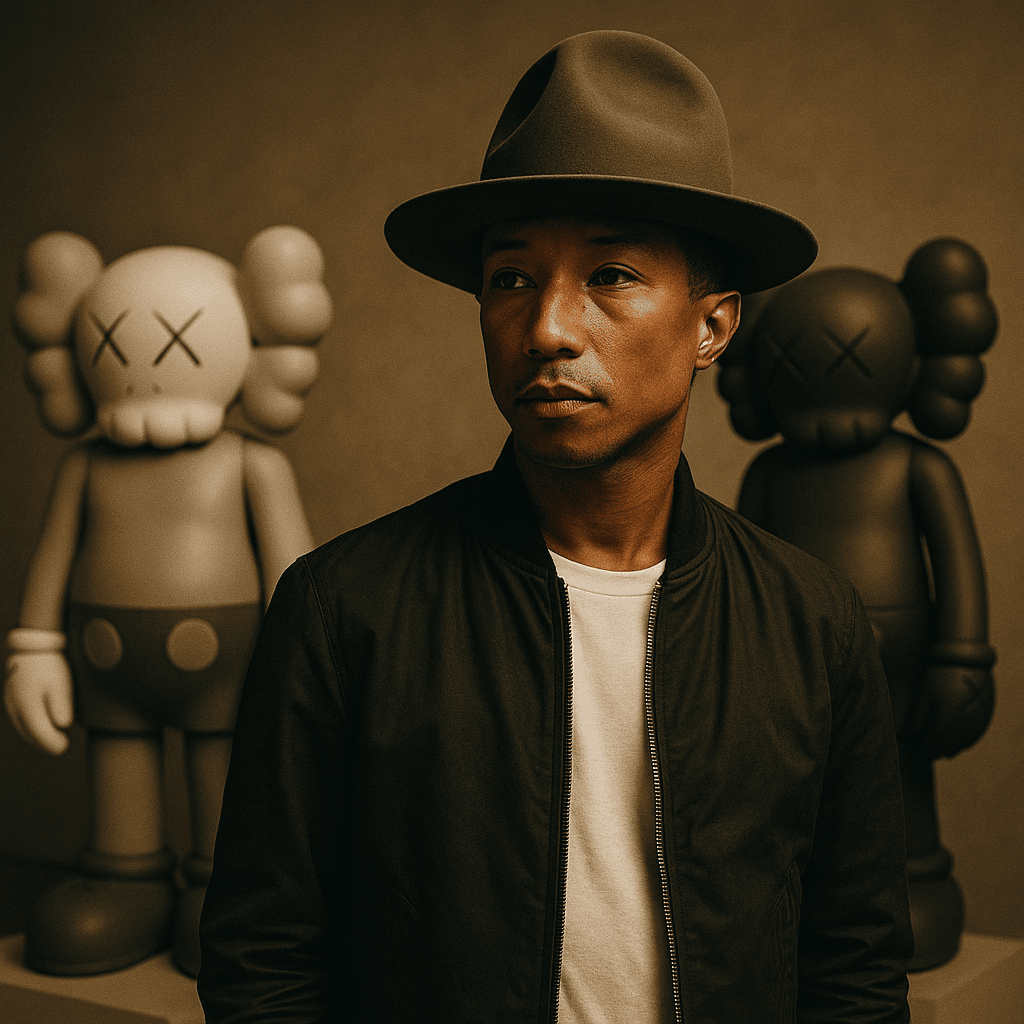
For Pharrell Williams, collecting is not nostalgia—it’s navigation. A way of charting where art has been, and where it might go next.
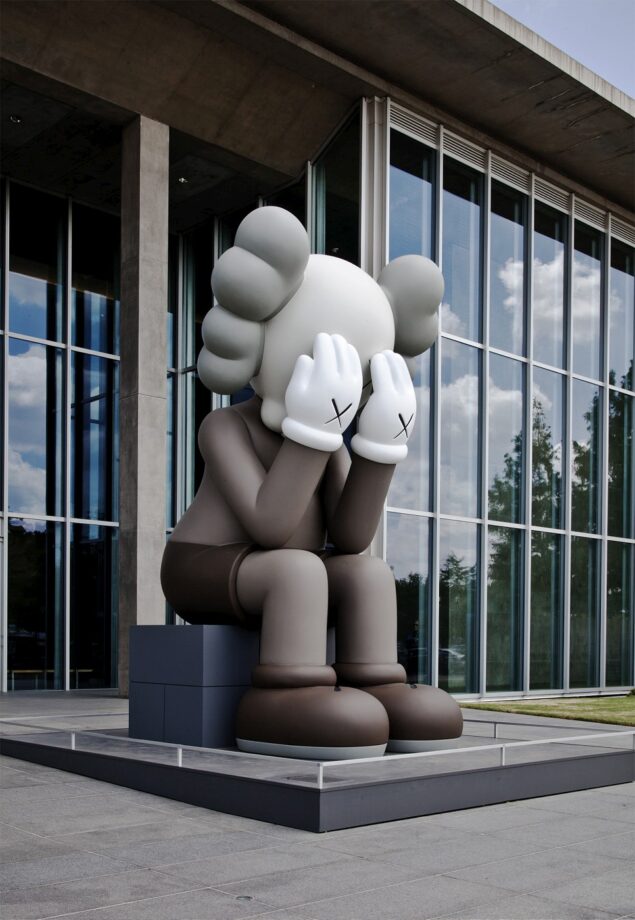
His collection reads like a visual mixtape, featuring bold figures from KAWS, radiant iconography by Takashi Murakami, and sculptural “future relics” by Daniel Arsham. These pieces aren’t just showpieces—they’re creative currency in Pharrell’s orbit, regularly surfacing in his music videos, fashion lines, and collaborative installations.
The vinyl figures may be playful in form, but they’re serious in message. They carry the spirit of street art into the gallery space—and Pharrell is fluent in both dialects.
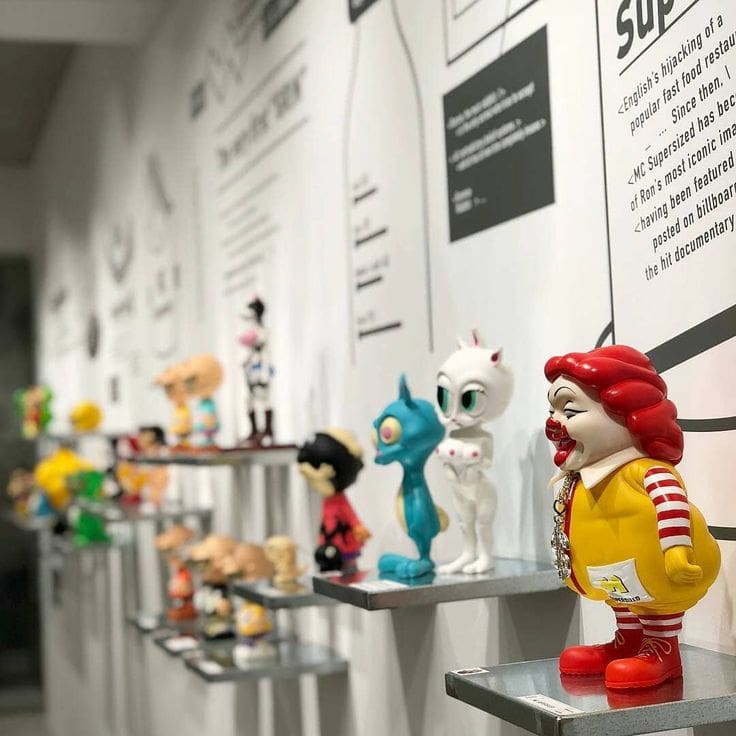
The Exhibition That Changed the Game
In 2014, Pharrell curated This Is Not a Toy at Toronto’s Design Exchange—a groundbreaking museum exhibition that reframed collectible toys as legitimate contemporary art. The show borrowed heavily from his own archive and served as both declaration and invitation: playfulness and high design can coexist—and flourish.
The exhibit proved what collectors already suspected: that these objects were not novelties, but vessels of meaning, commentary, and imagination.
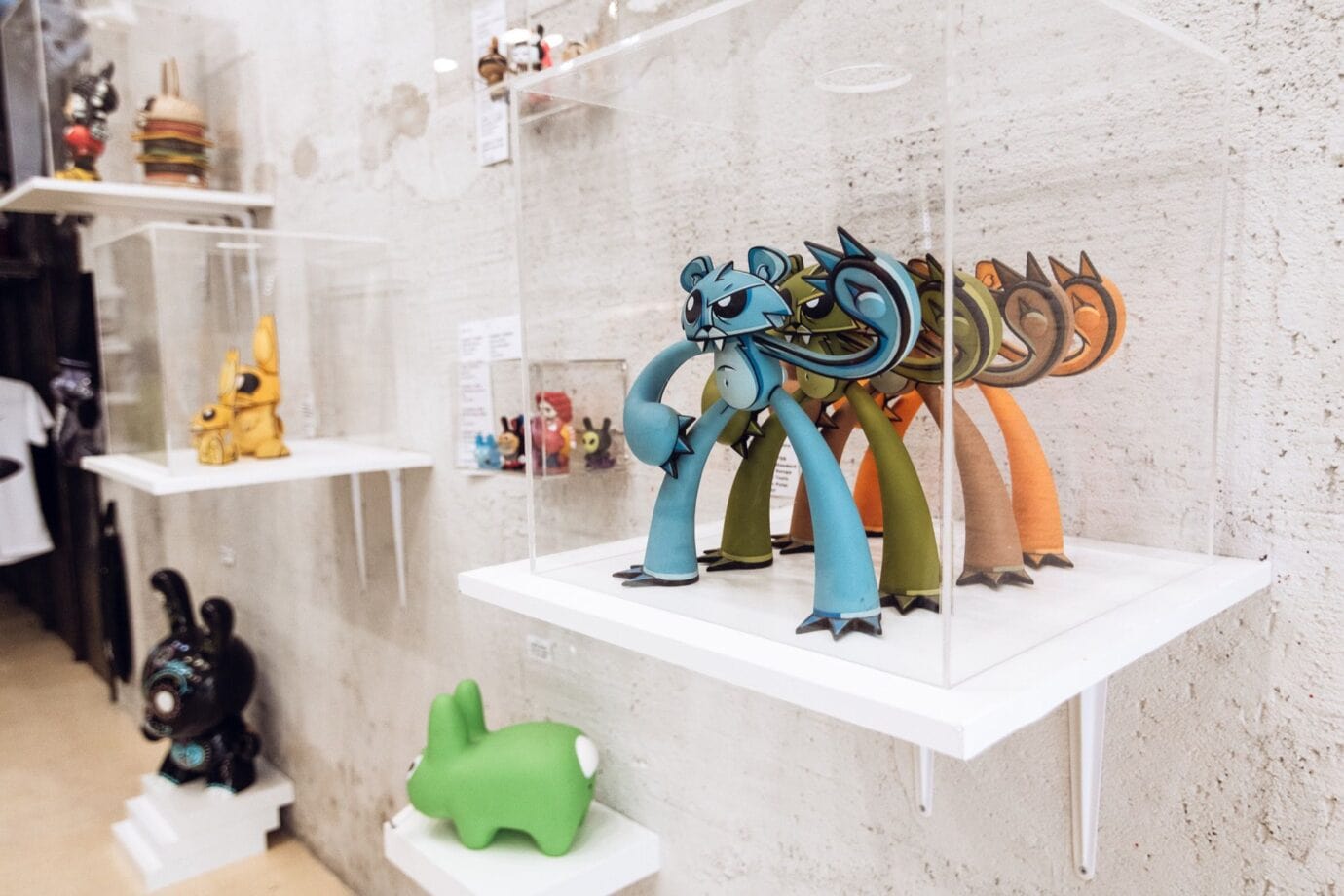
A Gallery You Can Live In
Pharrell’s personal spaces reflect this ethos. His homes feel like immersive installations—vibrant, irreverent, and deeply intentional. In one room, a KAWS Companion looms beside Murakami’s kaleidoscopic blooms; in another, a simple Bearbrick figure stands on a pedestal like a museum artifact.
His environments suggest that collecting isn’t about preservation—it’s about participation. These pieces don’t sit behind velvet ropes. They live and breathe with him.
Why It Matters
To collect is to care. To invest in ideas. To elevate the seemingly ordinary until it becomes unforgettable. Pharrell’s collection reminds us that art is not always solemn—it can be joyful, funny, strange, and alive.
In a world that often asks artists to choose between commercial and cultural, Pharrell chooses both—and proves they can enhance each other.